Spotlight on the Universidad de los Andes pilot site: Lessons from diversity in Colombia’s administration
LEVANTE’s ambitious aim is to identify how individual variability, group heterogeneity, and contextual variability influence children’s learning and development. Colombia implemented one of the very first pilot sites for LEVANTE, starting a school-based study just 10 months after the project began. Through LEVANTE they have been appealing to schools driven by an interest in improvement. As an international project that: a) attempts to build a robust battery of instruments to assess development, b) works with local projects to better develop those instruments, and c) cares about translation and adaptation, schools have perceived LEVANTE as a legitimate approach to offer them credible results and a future trustworthy tool they may be able to use in the long term.
Robust assessments can serve as useful tools for schools to diagnose what is being done well, identify what can be improved, and inform strategic planning. Although schools are interested in obtaining this information to improve education quality and performance, they are also nervous about the outcomes and implications that might come with a negative or less desirable result, which is why some may refuse opportunities to participate in assessment projects. Nevertheless, committed principals and teachers strive to achieve the best results despite the challenges they face.
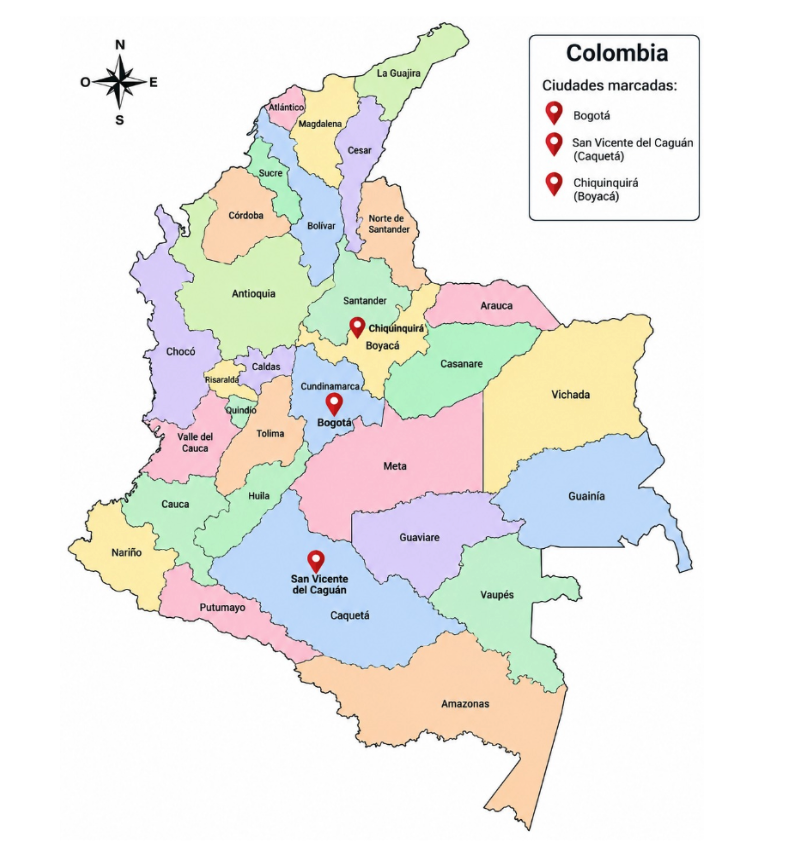
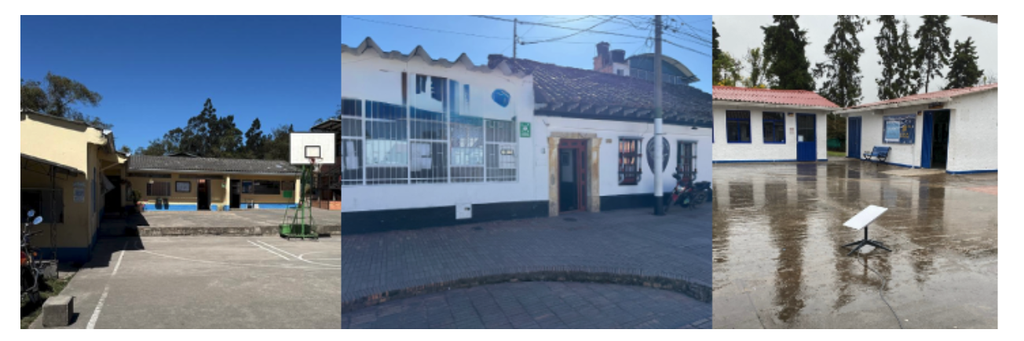
When Los Andes began pilot data collection in Colombia back in 2024, the University invited four schools from Bogotá to participate in the project. In 2026, a total of eight schools have been recruited and are part of the pilot phase. They represent three different contexts in the country, from central urban schools in Bogotá to schools serving remote rural areas. Schools range from large schools of up to 3,000 students in the city of Bogotá, to small rural single classrooms serving multiple grades at once and with no more than 10 students per grade. Currently, the groups included in the sample come from a wide variety of contexts: from those where families have continuous access to the internet, to those where families have little to no contact with electronic devices and internet connection in daily life. Such diversity allows LEVANTE to test the instruments and better understand their usage and characteristics for different settings. As a result, the battery of instruments has been effectively piloted and has, over time, been adapted to incorporate the lessons learned from fieldwork. This has been, in no small measure, a demonstration of the project’s commitment to learn about the instruments actively, strive to adapt them to different settings, and understand the different contexts that a diverse country like Colombia offers as a pilot site.
Although the process, as with any pilot study, has had its challenges, the experience has also had several highlights:
Privacy protections. Because the research database has been built to store information anonymously, collected data contributes to further advancing the field of study, while also protecting basic personal information. This is fundamental, as many Ethics Committees require this, and the project has already been conceived on those premises.
Computerized-adaptive tasks for a large age range. The battery has evolved to encompass adaptive tasks that ensure appropriateness to children’s age and development level. The downward extension to assess children from the age of two years old is the next milestone for the project and shall be an exciting new opportunity for pilot sites.
Shortened surveys for adults. The project is interested in collecting data from caregivers and teachers for a more comprehensive understanding of the context in which a child grows up. In Colombia, due to the diversity of contexts where the pilot is being implemented, the team had to reconsider the length of the survey because some caregivers in rural places had such limited contact with surveys and digital devices that enumerators had to sit and read the questions out loud and explain how to respond.
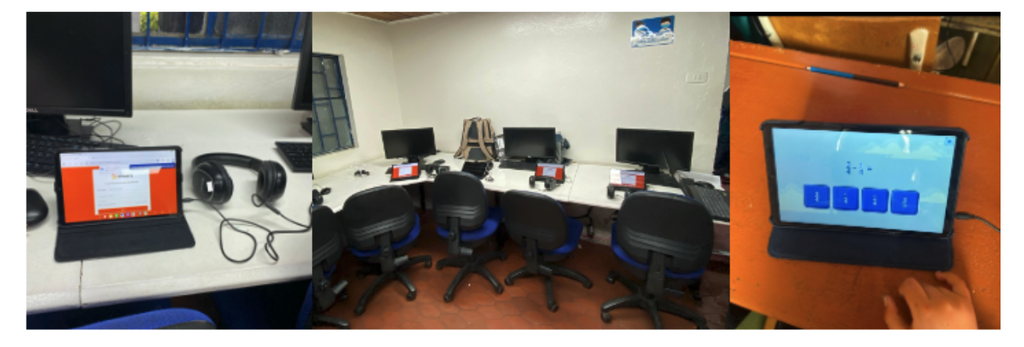
Tablet compatibility. The platform has been designed and corrected to enable usage on computers or tablets, which allows for a more portable delivery mechanism, thus opening opportunities to collect information from places where it was not likely to do so before, or even possible a few years ago. For instance, traveling to a place in the Amazonian region with 50 computers would still be a logistical challenge today, but being able to transport 50 tablets securely enables data to be collected in this region.
Portable devices to meet internet connectivity requirements. Although the platform currently depends on internet connectivity, the data requirements can be met using a diversity of portable devices, including but not limited to carrier data services or Starlink. One of the teams encountered a situation where phone carriers did not provide service to an area where a rural school was located; however, traveling with a Starlink device and setting it up in the school’s backyard (close to the fields where a herd of cows was eating grass) enabled the platform to be accessed and used.
Although Colombia has a National Education Evaluation Agency (ICFES) and, over the last decades, this public institution has designed and implemented robust instruments country-wide (which are required by law) and built an extraordinarily valuable information dataset, complementary instruments such as LEVANTE help build a more thorough understanding of child development in the country. If these batteries are also more widely available and are not dependent on a limited source of funding, but can be implemented in diverse projects, assessment can also become more available to those schools that want and value this information, but lack the resources or conditions to be included in implementation or evaluation projects. It also allows for foundations and institutions to access evaluation batteries at an affordable cost while meeting quality criteria that may contribute to better policymaking practices.